 Bible LockDownload
BIBLE LOCK GUIDES
How to Stop Doomscrolling Without Relying on Willpower
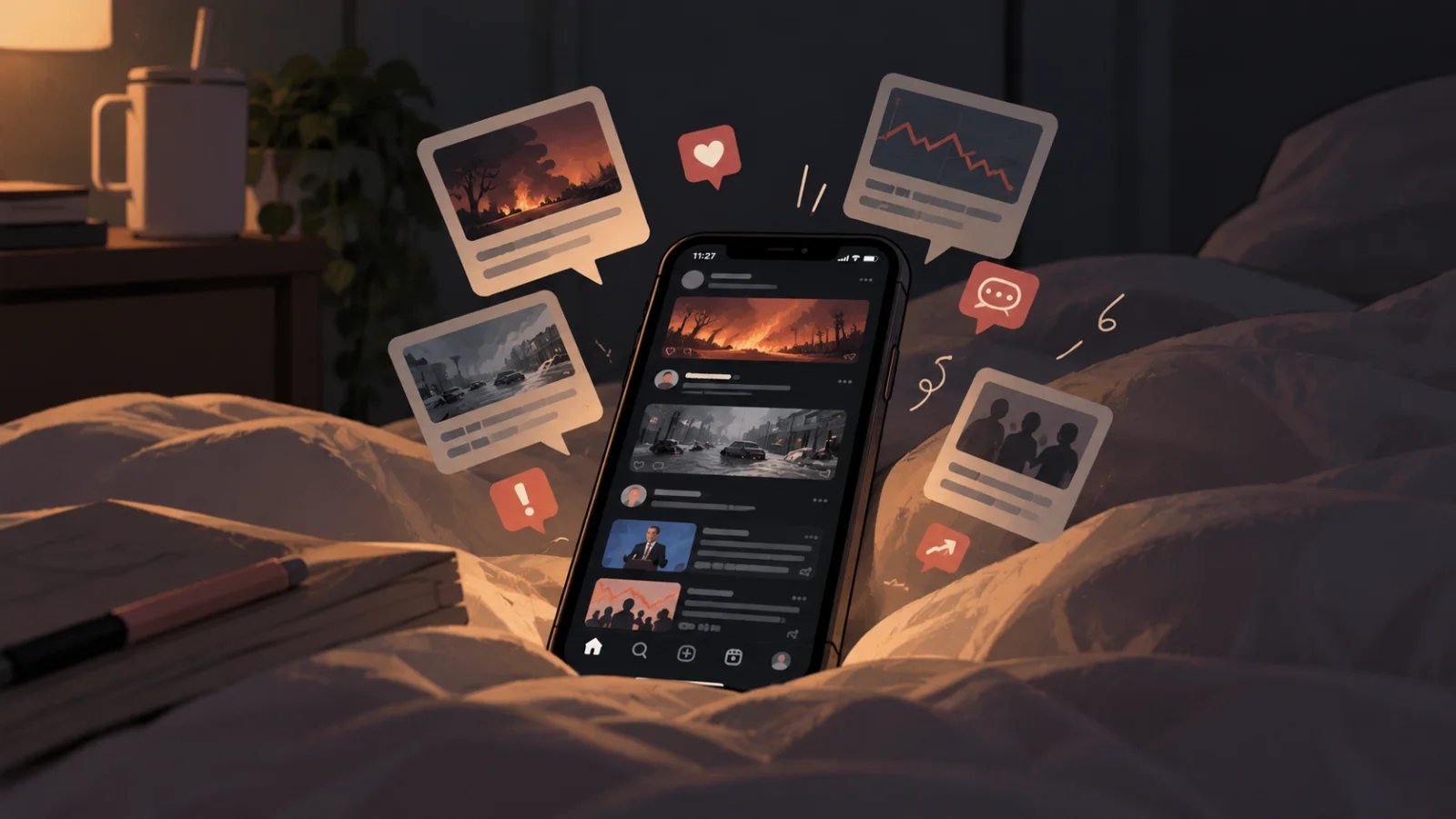
Have you ever checked the news because something bad was happening, only to end up reading about five other terrible things you weren't even looking for?
You feel worried, so you keep reading. Then you see an update that makes you even more worried, so you look for another one. Maybe someone shares a new detail, or a comment makes you wonder if things are worse than you thought. Before you know it, an hour has passed, and somehow you feel less at peace than when you started. Yet somehow, a few minutes later, you're doing it again.
That's doomscrolling. And if you've tried telling yourself to “just stop scrolling” without much success, I think there's something worth understanding first. I've noticed something about this habit: sometimes, we're not even looking for new information anymore. We're looking for something that will finally make us feel okay.
We want to know what's happening, whether things will get worse, and whether there's something we should be doing. But the next scroll doesn't always give us that reassurance. So how do you stop doomscrolling without having to fight yourself every few minutes? Let's talk about what actually helps.
Ask yourself: Am I looking for information or reassurance?
There's a difference between checking the news to understand what's happening and checking it because you feel uncomfortable not knowing. Imagine there's a worrying story in the news. You read an update, but it leaves you with questions. So you search for another article. Then you open social media to see what people are saying. Someone shares a new theory, and now you're searching again.
The problem is that there may not be an update that makes you feel completely reassured. Some situations are genuinely uncertain, and no amount of refreshing can tell you exactly what will happen next.
The next time you notice yourself checking the same story repeatedly, pause and ask: “Is there something new I actually need to know, or am I hoping the next update will make me feel less worried?”
Decide what you need to know before you start reading
One reason doomscrolling is so easy to fall into is that there's no natural ending... Think about it, there's always another headline, another opinion, another video, and another person claiming to have information you haven't seen yet. So instead of opening your feed and hoping you'll know when to stop, decide what you're there to find out.
For example, if you're checking on a major event, you might want to understand what happened, whether it affects you or your loved ones, and whether there's any practical action you need to take. Look for reliable reporting that answers those questions.
Once you've got the information you need for now, close the feed. You don't need to read every reaction, watch every clip, or understand what every stranger on the internet thinks about it. And if the situation is still developing, you can check again later at a time you choose.
Learn to leave some questions unanswered
This is probably the hardest part, because sometimes we keep scrolling precisely because we don't like how a situation makes us feel. Maybe you're worried about the future, concerned about your family, your job, the economy, or something happening on the other side of the world. You want to know that things will be okay, but the information available to you can't promise that. So you keep looking...
When you notice this happening, try reminding yourself: “I don't have to know everything about this situation right now.”
You can acknowledge what's worrying you without spending the rest of your evening reading about it. You can care about people who are suffering without exposing yourself to every upsetting image or story. And if you're a Christian, this is also a moment to bring your uncertainty to God. Sometimes, when there's nothing more you can do, praying about it and leaving it in His hands can help you find the peace you've been looking for.
Make it harder to fall into the habit in the first place
Let's be honest. If the app is right there on your home screen, your phone is in your hand, and you're already feeling bored or stressed, opening it takes almost no effort. That's why relying on willpower alone can be difficult. You're asking yourself to resist the same temptation over and over again, often when you're tired and least interested in making a good decision.
So change the setup a little. Move the apps you tend to get stuck on off your home screen. Log out if that extra step helps. Keep your phone away from your bed if nighttime scrolling is your problem. You can also set app limits, although it's worth choosing a limit you can realistically stick to rather than one you'll immediately ignore.
This is also where an app blocker can help. With Bible Lock, you can choose which apps to limit and read Scripture before opening them. Instead of going straight from an urge to another scroll, you get a moment to pause and redirect your attention toward God. Give Yourself a Second Before You Scroll →
Don't turn staying informed into a responsibility you can never finish
There's something else worth asking yourself: “Do I feel like it's my responsibility to keep checking?”
Sometimes we feel guilty for looking away. If something serious is happening, we might think that continuing to read about it means we care, while putting our phone down means we're being ignorant or selfish.
But constantly consuming information isn't the same as helping. And feeling distressed by every update doesn't necessarily make you better informed or better able to respond.
If there's something practical you can do, do what you reasonably can. Donate to a trustworthy organization, check on someone you care about, follow reliable safety guidance, or help your community if that's appropriate.
You probably will have moments when you fall back into the habit. Maybe you'll wake up to worrying news, or a story will catch your attention late at night. You might find yourself scrolling for longer than you intended. Don't use that moment as proof that you can't change.
Instead, ask yourself what kept you there. Were you looking for an answer? Were you scared of missing something? Did you feel helpless and want to do something, even if that something was just reading more? The answer can help you decide what to do differently next time.